


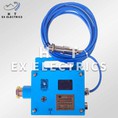


In the realm of aerospace engineering, precision and reliability are non - negotiable. Every component, no matter how small, plays a crucial role in ensuring the safety and success of aerospace missions. As a leading pressure sensor supplier, I've witnessed firsthand the transformative impact that pressure sensors can have in this high - stakes industry.
The Fundamentals of Pressure Sensors
Before delving into their aerospace applications, it's essential to understand what pressure sensors are. Pressure sensors are devices that measure pressure, converting it into an electrical signal. They come in various types, such as piezoresistive, capacitive, and optical pressure sensors, each with its unique operating principle and characteristics.
Piezoresistive pressure sensors rely on the change in electrical resistance of a material when subjected to pressure. These sensors are known for their high sensitivity and wide operating range, making them suitable for a variety of applications. Capacitive pressure sensors, on the other hand, measure pressure by detecting the change in capacitance between two plates. They offer excellent linearity and low hysteresis, which are desirable traits in many aerospace scenarios. Optical pressure sensors use light to measure pressure, providing advantages such as immunity to electromagnetic interference and high - precision measurements.
Pressure Sensors in Aerospace Propulsion Systems
One of the most critical areas where pressure sensors are used in aerospace is in propulsion systems. Whether it's a rocket engine or an aircraft turbine, precise pressure measurement is vital for optimal performance.
In rocket engines, pressure sensors are used to monitor the pressure of propellants in the fuel tanks, pipes, and combustion chambers. For example, accurate pressure measurement in the fuel tank helps ensure a consistent flow of propellants to the engine. Any sudden drop or increase in pressure could indicate a problem such as a leak or a blockage, which, if not detected early, could lead to a catastrophic failure.
In aircraft turbines, pressure sensors are employed to measure the pressure at various stages of the engine, from the intake to the exhaust. This information is used to optimize the engine's performance, control the fuel - air mixture, and detect any signs of engine wear or malfunction. For instance, by monitoring the pressure in the compressor section, engineers can determine if the compressor is operating efficiently. A drop in pressure could signal a problem with the compressor blades, such as erosion or damage.
Pressure Sensors for Environmental Monitoring in Spacecraft
Spacecraft operate in extremely harsh environments, where factors such as temperature, radiation, and vacuum can have a significant impact on their performance. Pressure sensors play a crucial role in monitoring the internal and external environment of spacecraft.
Inside the spacecraft, pressure sensors are used to maintain a stable cabin pressure for the safety and comfort of the crew. They continuously monitor the pressure levels and trigger the appropriate systems to adjust the pressure if it deviates from the desired range. For example, if the cabin pressure drops due to a leak, the pressure sensors will detect the change and activate the pressurization system to restore the pressure.
Outside the spacecraft, pressure sensors are used to measure the ambient pressure in space. This information is essential for understanding the space environment and for various scientific experiments. For instance, in a mission to study the atmosphere of a planet, pressure sensors can provide valuable data about the planet's atmospheric pressure and its variations.
Structural Health Monitoring with Pressure Sensors
Another important application of pressure sensors in aerospace is in structural health monitoring. Aircraft and spacecraft structures are subjected to various stresses during flight, such as aerodynamic forces, vibration, and thermal expansion. Over time, these stresses can cause damage to the structure, such as cracks or fatigue.
Pressure sensors can be integrated into the structure of an aircraft or spacecraft to monitor the internal pressure changes caused by these stresses. By analyzing the pressure data, engineers can detect early signs of damage and take preventive measures before a major failure occurs. For example, in a composite aircraft wing, pressure sensors can be embedded in the layers of the composite material. Any change in the internal pressure due to a crack or delamination can be detected by the sensors, allowing for timely repairs.
Comparison with Other Sensors in Aerospace
In the aerospace industry, pressure sensors often work in conjunction with other types of sensors, such as [Ultrasonic Flow Sensor](/water - spraying - dust - reduction - device/intrinsically - safe - water - spraying - dust - reduction/ultrasonic - flow - sensor.html), [Explosion - Proof Ball Valve](/water - spraying - dust - reduction - device/intrinsically - safe - water - spraying - dust - reduction/explosion - proof - ball - valve.html), and [Water Level Sensor](/water - spraying - dust - reduction - device/intrinsically - safe - water - spraying - dust - reduction/water - level - sensor.html). While each type of sensor has its specific function, pressure sensors offer unique advantages.
Ultrasonic flow sensors are used to measure the flow rate of fluids, such as fuel or coolant. They work based on the principle of ultrasonic waves traveling through the fluid. However, pressure sensors can provide complementary information about the fluid's pressure, which is crucial for understanding the overall fluid dynamics in the system.


Explosion - proof ball valves are used to control the flow of fluids in hazardous environments. They are designed to prevent explosions by isolating the fluid flow. Pressure sensors can be used in conjunction with these valves to monitor the pressure upstream and downstream of the valve, ensuring proper operation and safety.
Water level sensors are used to measure the level of water in tanks or reservoirs. In aerospace applications, water is often used for cooling or life - support systems. Pressure sensors can be used to measure the pressure exerted by the water column, which can be correlated to the water level, providing an additional means of monitoring.
Challenges and Considerations
While pressure sensors offer numerous benefits in aerospace applications, there are also several challenges and considerations that need to be addressed.
One of the main challenges is the harsh operating environment. Aerospace applications expose pressure sensors to extreme temperatures, high radiation levels, and high - vibration conditions. These factors can affect the performance and reliability of the sensors. To overcome these challenges, pressure sensors need to be designed with robust materials and advanced packaging techniques. For example, sensors can be coated with special materials to protect them from radiation and corrosion.
Another consideration is the need for high accuracy and reliability. In aerospace, even a small error in pressure measurement can have serious consequences. Therefore, pressure sensors need to be calibrated regularly and have built - in redundancy to ensure reliable operation.
The Future of Pressure Sensors in Aerospace
The future of pressure sensors in aerospace looks promising. With the continuous advancement of technology, pressure sensors are becoming more accurate, reliable, and compact. New materials and manufacturing techniques are being developed to improve the performance of pressure sensors in harsh environments.
In addition, the increasing demand for unmanned aerial vehicles (UAVs) and space exploration missions will drive the need for more advanced pressure sensors. These sensors will need to be able to operate autonomously and provide real - time data for remote monitoring and control.
Contact for Procurement
If you're in the aerospace industry and are looking for high - quality pressure sensors, we're here to help. Our company specializes in providing a wide range of pressure sensors that are designed to meet the demanding requirements of aerospace applications. We offer customized solutions to fit your specific needs and ensure the highest level of performance and reliability. Whether you're working on a small UAV project or a large - scale space mission, we have the expertise and products to support you. Contact us today to start a procurement discussion and take your aerospace project to the next level.
References
- Smith, J. D. (2018). Pressure Sensor Technology for Aerospace Applications. Aerospace Engineering Journal, 25(3), 123 - 135.
- Johnson, R. M. (2019). Advances in Structural Health Monitoring Using Pressure Sensors in Aerospace. Journal of Aerospace Science and Technology, 30(2), 201 - 215.
- Brown, A. L. (2020). Environmental Monitoring in Spacecraft with Pressure Sensors. Space Science Review, 45(1), 78 - 92.