


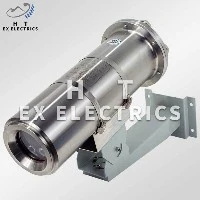
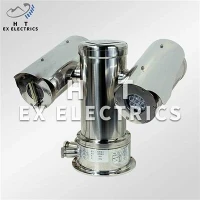

1. Explosion-proof rating and protection performance
Explosion-proof certification: It is necessary to clarify whether the equipment has passed international explosion-proof certifications such as Ex d and Ex e (e.g., IEC standards) and domestic GB certifications to ensure its suitability for specific explosive environments.
Protection level: IP66 and above is preferred, where the first digit 6 indicates complete dust protection, and the second digit 6 and above can withstand strong water jets, suitable for harsh climates.
2. Imaging quality and resolution
Pixels and clarity: For industrial scenarios, 3 million pixels or more are recommended, and the dynamic range should be ≥58.2dB to cope with strong light and backlight.
Wide dynamic range and low light performance: The wide dynamic range function should provide a natural transition between bright and dark areas, and noise control capability under low light conditions is crucial.
3. Environmental adaptability and durability
Temperature range: Standard models should support -40℃~60℃, and special scenarios (such as steelmaking) require resistance to high temperatures of 2000℃.
Humidity and air pressure: Must be adaptable to 95% humidity and air pressure changes in high-altitude/basin areas.
4. Functional expansion and intelligence
Intelligent analysis: Such as temperature anomaly detection and intrusion alarms, enhancing proactive security capabilities.
Transmission and storage: Supports fiber optic/wireless long-distance transmission, compatible with network hard drives, SD cards, and cloud storage.
5. Manufacturer and after-sales service
Prioritize manufacturers with deep technical expertise (such as Beitell and Hikvision), as their products offer better guarantees in terms of stability and after-sales support.
