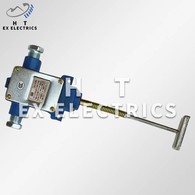


An intrinsically safe actuator position sensor provides critical feedback on the stroke, angle, or terminal position of industrial actuators in explosive atmospheres. In coal mine automation, selecting a position feedback device requires verifying mechanical fit, electrical compatibility, and system-level intrinsic safety.
This product page outlines the technical criteria, system compatibility, and application parameters needed to evaluate an intrinsically safe position sensor for equipment manufacturing, retrofit projects, or mine automation infrastructure.
Technical Parameters
|
Parameter Category |
Specification Details |
Buyer Verification Checklist |
|
Sensing Principle |
Linear displacement, rotary angle, or discrete end-position detection |
Match sensor type to the mechanical motion of the target actuator |
|
Measuring Range |
Stroke length or angular rotation limit |
Confirm physical travel matches sensor electrical span |
|
Electrical Output |
Analog (4 to 20mA), digital pulse, or discrete switching signals |
Verify compatibility with PLC input cards and control architecture |
|
Supply Voltage |
Rated operating voltage and current limits |
Check power distribution requirements in hazardous areas |
|
Intrinsic Safety Parameters |
Entity parameters including Ui, Ii, Ci, and Li |
Ensure parameters match associated safety barriers or galvanic isolators |
|
Explosion Protection |
Mine-specific explosion-proof or intrinsic safety classification |
Confirm validity and scope of required mine safety approvals |
|
Ingress Protection |
IP67, IP68, or higher ratings |
Verify resistance against moisture, coal dust, and hydraulic fluid |
|
Operating Temperature |
Ambient temperature range for underground service |
Check thermal limits against installation site conditions |
Typical Mining & Industrial Applications
Position sensing is utilized across various automated underground mechanisms. Suitability depends on mechanical design, environmental exposure, and control architecture:
Hydraulic Actuator Monitoring: Providing real-time stroke feedback for heavy-duty hydraulic cylinders in underground roof supports and mining machinery.
Valve & Damper Feedback: Monitoring precise opening and closing positions of automated ventilation dampers and fluid control valves.
Conveyor & Gate Positioning: Tracking mechanical movement of material handling gates, diverters, and tensioning mechanisms.
Intrinsic Safety & System Architecture
Intrinsic safety is a system-level requirement, not merely a component label. When evaluating this sensor for hazardous locations, confirm the complete circuit compliance:
The field sensor and its certification must match the intended explosive gas or dust environment.
Associated Apparatus: Certified safety barriers or galvanic isolators must be correctly installed between the sensor in the hazardous area and the control system in the safe area.
Cabling: Cable capacitance, inductance, and routing must comply with the approved control drawing.
Manufacturing Evidence & Quality Control
Strict quality and testing protocols are applied to all explosion-proof safety devices. Prior to delivery, key verification steps include:
Calibration & Linearity Testing: Ensuring accurate signal output across the entire measuring range.
Dielectric & Insulation Testing: Verifying electrical safety under rated operating conditions.
Traceability: Each unit is marked with a unique serial number linked to factory inspection records.
Frequently Asked Questions
Hot Tags: intrinsically safe actuator position sensor, China intrinsically safe actuator position sensor manufacturers, intrinsically safe junction box sensor, Intrinsically Safe Mining Humidity Sensor, intrinsically safe pump sensor, intrinsically safe sensor for event monitoring, intrinsically safe sensor for smart ceramics plants, intrinsically safe sensor for smart oil and gas fields