


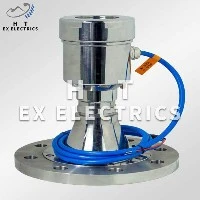


If you've ever walked through a factory floor, chances are you haven't stopped to think about the tiny, unassuming sensors working behind the scenes to keep operations running smoothly. For a pressure sensor supplier, I get asked this question all the time: Can pressure sensors actually be used in industrial automation? Short answer: Hell yeah-they're not just for measuring air pressure in car tires or water in a home's plumbing system. They're a backbone of industrial automation, and we've seen firsthand how they keep production lines safe, efficient, and on track.


Let me break this down. Industrial automation is all about using control systems to run machinery without constant human intervention, right? Whether it's a food processing plant, a chemical refinery, or a water treatment facility, every process depends on consistent pressure to work correctly. Pressure sensors turn that physical force into electronic signals that automation systems can read, adjust, and act on. No signal? No way to keep things from going off the rails.
Take our work with dust reduction systems, for example. A lot of industrial sites-mines, lumber mills, metal fabrication shops-need to control fine dust that's not just a nuisance but a fire hazard. We supply Pressure Sensor for these setups, and here's how it fits in: The system's job is to spray water at just the right pressure to capture dust without wasting gallons on a single spot. Our sensors track water pressure in the pipes 100 times a second, so if it drops too low (maybe a line got clogged), the automation system kicks in to adjust the pump or alert a worker before the dust gets out of hand. And when you pair that with other sensors like Ultrasonic Flow Sensor to track how much water is actually moving, and a Water Level Sensor to make sure the tank doesn't run dry, the whole setup runs automatically with zero manual checks. That's industrial automation 101-pressure sensors are the eyes and ears for that pressure part.
But it's not just dust control. Think about chemical manufacturing, where pipelines carry corrosive, flammable liquids. Pressure here is non-negotiable. If a pipeline's pressure spikes, it could crack, leak, or even explode. Our explosion-proof pressure sensors are built to withstand that kind of environment-sealed to keep hazardous gases out, calibrated to detect tiny pressure changes way before a failure happens. The automation system ties those sensors to valves like an Explosion-Proof Ball Valve, so if pressure gets too high, the valve closes automatically to shut off the line. No human needed to stare at gauges 24/7-pressure sensors do the monitoring and reacting. That's the whole point of automation: reducing risk and keeping operations running without constant oversight.
A lot of people new to industrial automation think pressure sensors are one-size-fits-all, but that's not true. Some jobs need high-temperature sensors for furnaces or kilns, others need low-pressure sensors for thin films in semiconductor manufacturing, and some have to work in places with explosive atmospheres (those are the explosion-proof ones I mentioned). We've had clients in the food and beverage industry tell us their pressure sensors are used to make sure carbonation in soda is just right-too much pressure and the bottles burst, too little and the drink tastes flat. For them, every batch relies on the sensor's accuracy to keep production moving and waste low. That's automation at work, and pressure sensors are the critical component.
I've also seen how pressure sensors help with predictive maintenance, which is huge for industrial sites. Instead of waiting for a machine to break down (which costs thousands in downtime), sensors track pressure trends to catch small issues before they become big ones. For example, a hydraulic system in a factory might have a slow pressure drop over time, which could mean a seal is wearing out. Our sensors pick up that drop, and the automation system schedules a repair during a planned shutdown instead of an emergency fix. That saves companies so much money-no more halting a entire production line because a part failed unexpectedly.
Wait, let's address a common misconception. Some folks say, "If I can just use a gauge to read pressure manually, why do I need a sensor?" Sure, gauges work for spot checks, but automation needs real-time data that can be sent to a control room, logged for records, and used to adjust processes automatically. You can't have a robot arm on a car assembly line that slows down when pressure drops if a human has to go check a gauge every few minutes. Pressure sensors turn static pressure numbers into dynamic data that makes automation possible.
Another example: water treatment plants, which rely on consistent pressure to push water through filters and disinfection systems. If the pressure drops, filters get clogged, water quality goes down, and the whole process is off. Our pressure sensors alert the automation system to backwash the filters before pressure gets too low, which keeps water safe and meets regulatory standards. Without those sensors, plants would have to shut down regularly to clean filters manually, which is not only inefficient but could lead to water that doesn't meet rules-big fines for that.
Now, as a pressure sensor supplier, we've seen the demand for these sensors grow a lot over the last 10 years. More factories are switching from manual operations to full automation, and every single one needs pressure sensors. We don't just sell the sensors-we work with clients to pick the right one for their specific job. Whether it's a low-cost sensor for a basic dust reduction system or a high-temperature, explosion-proof one for a chemical refinery, we make sure it fits their automation setup.
Let's circle back to the question: Can pressure sensors be used in industrial automation? The answer is a resounding yes-they're not just a "nice to have," they're a core part of almost every automated industrial process. From dust control to hydraulic systems to chemical pipelines, pressure sensors make automation work by providing the consistent, real-time data that control systems need. Without them, you'd have to rely on constant human monitoring, which is slow, expensive, and risky.
If you're running an industrial operation and looking to add or upgrade automation, pressure sensors are where to start. They're reliable, flexible, and can be tailored to almost any environment. We have a full range of sensors built for industrial use, including the ones we use in our dust reduction systems, and we can help you pick the right one for your needs. Whether you need a standard sensor or something specialized, get in touch with us to talk through your requirements and find the perfect pressure sensor for your automation setup.