


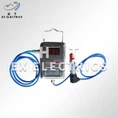

When dealing with intrinsically safe sensors, a common question that often arises is whether they need special wiring. As a supplier of intrinsically safe sensors, including products like the Intrinsically Safe Infrared Temperature Sensor, Intrinsically Safe Proximity Sensor, and Intrinsically Safe Inductive Proximity Sensor, I'd like to delve into this topic to provide a comprehensive understanding.
Understanding Intrinsically Safe Sensors
Intrinsically safe sensors are designed to operate in hazardous environments where there is a risk of explosion due to the presence of flammable gases, vapors, dust, or fibers. These sensors are engineered in such a way that they do not generate enough electrical or thermal energy to cause an ignition in their surroundings. The basic principle behind their design is to limit the amount of energy that can be released in the event of a fault, such as a short - circuit or an open - circuit.
The safety of these sensors is achieved through a combination of design features, including low - power components, proper insulation, and energy - limiting circuits. However, the wiring that connects these sensors to other parts of the system also plays a crucial role in maintaining the overall intrinsic safety.
Why Special Wiring Might Be Necessary
Energy Limitation
The wiring used for intrinsically safe sensors must be able to limit the energy that can be transferred to the hazardous area. In a normal electrical circuit, a short - circuit can cause a large amount of current to flow, which may generate enough heat to ignite flammable substances. For intrinsically safe systems, the wiring is selected and installed in a way that restricts the current and voltage in case of a fault. This often involves using cables with low capacitance and inductance values, as these electrical properties can store and release energy.
Isolation
In addition to energy limitation, the wiring must provide isolation between the intrinsically safe circuit in the hazardous area and the non - intrinsically safe circuit in the safe area. This isolation helps prevent any electrical interference or energy transfer that could compromise the intrinsic safety of the system. Special isolation transformers, barrier devices, or galvanic isolators are commonly used to achieve this isolation.
Avoiding Capacitance and Inductance Effects
Capacitance and inductance in the wiring can cause energy to be stored and released in a way that could pose a risk in a hazardous environment. Capacitive effects can lead to the sudden discharge of energy, while inductive effects can cause high - voltage spikes during a fault. To minimize these risks, low - capacitance and low - inductance cables are used. These cables are typically designed with a specific geometry and insulating materials to reduce the unwanted electrical properties.
Protection Against Physical Damage
The wiring for intrinsically safe sensors also needs to be protected against physical damage. In a hazardous environment, there may be various factors such as mechanical stress, abrasion, and chemical exposure that can damage the cables. Special cable jackets are used to provide protection against these factors. For example, cables with a tough outer sheath made of materials like polyurethane or PVC can resist abrasion and chemical attack.
Types of Special Wiring for Intrinsically Safe Sensors
Intrinsically Safe Cables
These cables are specifically designed for use in intrinsically safe circuits. They have low capacitance and inductance values and are often color - coded for easy identification. Intrinsically safe cables may also have additional features such as double insulation or a shield to provide protection against electromagnetic interference.
Barrier Wiring
Barrier devices are used to limit the energy that can be transferred from the non - intrinsically safe side to the intrinsically safe side of the circuit. The wiring for these barriers is also critical. The cables must be properly sized and connected to ensure that the barrier functions correctly. In some cases, special terminal blocks are used to connect the cables to the barrier devices to maintain the required electrical characteristics.
Installation Considerations for Special Wiring
Separation from Non - Intrinsically Safe Wiring
It is essential to keep the intrinsically safe wiring separate from non - intrinsically safe wiring. This separation helps prevent any electrical coupling between the two circuits, which could lead to a transfer of energy that might compromise the intrinsic safety of the system. In many cases, the intrinsically safe cables are run in separate conduits or cable trays from the non - intrinsically safe cables.
Proper Termination
The termination of the wiring is also a critical aspect of the installation. The connections must be made in a way that ensures good electrical contact and mechanical stability. Loose connections can cause arcing, which is a significant hazard in a flammable environment. Special tools and techniques may be required to terminate the cables correctly, such as using crimp connectors or soldering with appropriate heat - limiting methods.
Documentation
Proper documentation of the wiring installation is necessary. This includes details such as the cable type, length, routing, and termination points. The documentation helps in the maintenance and inspection of the system and ensures that any changes or repairs are carried out in a way that maintains the intrinsic safety of the system.
Exceptions and Situations Where Special Wiring May Not Be Strictly Necessary
In some cases, if the intrinsically safe sensor is designed with very low power requirements and is used in a relatively low - risk hazardous environment, the need for extremely specialized wiring may be reduced. However, it is important to note that these situations are rare, and a thorough risk assessment should always be conducted before deciding on the wiring requirements.
For example, if a sensor operates at a very low voltage and current, and the surrounding area has a low concentration of flammable substances, the risk of ignition due to electrical faults in the wiring may be minimal. But even in these cases, some basic safety measures such as using properly insulated cables and ensuring good electrical connections are still necessary.
Conclusion
In general, intrinsically safe sensors do need special wiring to ensure the overall safety of the system. The wiring plays a vital role in limiting energy transfer, providing isolation, and protecting the system from physical damage. As a supplier of intrinsically safe sensors, we understand the importance of these wiring requirements and can provide guidance on the appropriate wiring solutions for different applications.


If you are considering the purchase of intrinsically safe sensors for your project and need more information on the wiring requirements or our sensor products, such as the Intrinsically Safe Infrared Temperature Sensor, Intrinsically Safe Proximity Sensor, or Intrinsically Safe Inductive Proximity Sensor, we encourage you to contact us for a detailed discussion. Our team of experts is ready to assist you in making the right choices for your specific needs.
References
- IEC 60079 - 11:2011, Explosive atmospheres - Part 11: Equipment protection by intrinsic safety “i”.
- NFPA 70 (NEC), National Electrical Code.
- FM Global standards for electrical equipment in hazardous areas.