



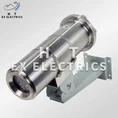


In explosive areas, ensuring safety is of utmost importance. Explosion - proof cameras play a crucial role in monitoring these high - risk environments. However, one significant challenge they face is electromagnetic interference (EMI). As an explosion - proof camera supplier, I will delve into how our explosion - proof cameras deal with electromagnetic interference in explosive areas.
Understanding Electromagnetic Interference in Explosive Areas
Explosive areas, such as oil refineries, chemical plants, and mines, are filled with various electrical and electronic equipment. These devices generate electromagnetic fields during their operation. EMI can be classified into two main types: conducted interference and radiated interference. Conducted interference travels along power lines and signal cables, while radiated interference spreads through the air in the form of electromagnetic waves.
In explosive areas, the presence of flammable gases, vapors, or dust makes the situation even more critical. Any malfunction of the explosion - proof camera due to EMI could lead to a failure in monitoring, potentially resulting in safety hazards. For example, if the camera fails to transmit clear images or loses its connection because of EMI, operators may not be able to detect abnormal situations in time, such as gas leaks or equipment malfunctions.


Design Features to Combat Electromagnetic Interference
Shielding
One of the primary ways our explosion - proof cameras deal with EMI is through shielding. We use high - quality conductive materials to enclose the internal components of the camera. The shielding acts as a barrier, preventing external electromagnetic fields from penetrating the camera and interfering with its operation. For instance, the camera housing is made of metal alloys with good electrical conductivity. This metal enclosure is grounded, which allows any induced electrical charges to be safely dissipated.
The shielding also helps to prevent the camera from emitting its own electromagnetic signals that could interfere with other nearby equipment. Our Explosion - Proof AI Camera is designed with a comprehensive shielding system. The internal circuit boards are also shielded individually, providing an extra layer of protection against EMI. This multi - layer shielding approach ensures that the camera can operate stably in environments with high levels of electromagnetic noise.
Filtering
Filtering is another essential technique. Our cameras are equipped with high - performance filters on both the power supply and signal lines. These filters are designed to block unwanted frequencies and allow only the necessary signals to pass through. For example, in the power supply circuit, we use electromagnetic interference filters (EMI filters) to remove high - frequency noise from the incoming power. This helps to ensure a clean and stable power supply to the camera, reducing the risk of malfunctions caused by power - related EMI.
On the signal lines, such as those used for video transmission, we use filters to suppress any electromagnetic interference that may be picked up along the way. These filters are carefully selected based on the specific frequency characteristics of the signals and the expected EMI in the explosive area. Our Explosion Proof Camera for Oil and Gas utilizes advanced filtering technology to ensure clear and reliable video transmission even in the presence of strong electromagnetic fields.
Isolation
Isolation techniques are also employed to minimize the impact of EMI. We use optical isolation and electrical isolation in our cameras. Optical isolation uses light to transmit signals between different parts of the camera, eliminating the direct electrical connection. This effectively prevents the spread of EMI through electrical conductors. For example, in the communication between the camera's sensor and the processing unit, we use optical isolators to ensure that any electromagnetic interference on one side does not affect the other side.
Electrical isolation is achieved by using transformers and isolation amplifiers. These components separate the electrical circuits of different parts of the camera, reducing the coupling of electromagnetic interference. Our Intrinsically Safe Infrared Camera uses isolation techniques to ensure its safe and stable operation in explosive areas with high levels of EMI.
Testing and Certification
To ensure that our explosion - proof cameras can effectively deal with electromagnetic interference in explosive areas, we conduct rigorous testing. Our cameras are tested in specialized electromagnetic compatibility (EMC) laboratories. These tests simulate the real - world electromagnetic environments in explosive areas, including high - intensity electromagnetic fields, pulsed interference, and radio - frequency interference.
The cameras must meet strict international standards for EMC, such as the IEC 61000 series of standards. These standards define the limits and test methods for electromagnetic emissions and immunity of electrical and electronic equipment. Only after passing these tests can our cameras be certified for use in explosive areas. The certification provides customers with the confidence that our cameras can operate reliably in the presence of EMI.
Benefits of Our EMI - Resistant Explosion - Proof Cameras
The ability of our explosion - proof cameras to deal with electromagnetic interference brings several benefits. Firstly, it ensures continuous and reliable monitoring in explosive areas. Operators can rely on the clear and stable video feed from the cameras to detect potential safety hazards in a timely manner. This helps to prevent accidents and protect the lives and property of workers.
Secondly, the EMI - resistant design reduces the maintenance requirements of the cameras. Since the cameras are less likely to malfunction due to electromagnetic interference, the frequency of repairs and replacements is significantly reduced. This not only saves costs but also minimizes the downtime of the monitoring system.
Finally, our cameras' compliance with international EMC standards makes them suitable for use in various explosive areas around the world. Customers can trust that our products meet the highest safety and performance requirements, regardless of the specific electromagnetic environment in their facilities.
Contact Us for Procurement
If you are in need of explosion - proof cameras that can effectively deal with electromagnetic interference in explosive areas, we are here to help. Our team of experts can provide you with detailed information about our products, including their features, performance, and application scenarios. We can also offer customized solutions to meet your specific requirements.
Whether you are involved in the oil and gas industry, chemical manufacturing, or any other field that requires explosion - proof monitoring, our explosion - proof cameras are the ideal choice. Contact us today to start a procurement discussion and ensure the safety and reliability of your explosive area monitoring system.
References
- International Electrotechnical Commission (IEC). IEC 61000 series of standards for electromagnetic compatibility.
- Various research papers on electromagnetic interference and explosion - proof equipment design in industrial environments.