


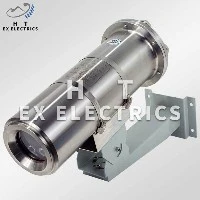
As a supplier of explosion proof IR cameras, one of the most frequently asked questions from our clients is about the image storage capacity of these cameras. In this blog post, I'll delve into the factors that determine the image storage capacity of an explosion proof IR camera, and how you can optimize it for your specific needs.
Understanding the Basics of Image Storage in Explosion Proof IR Cameras
Before we discuss the storage capacity, it's important to understand how explosion proof IR cameras store images. These cameras typically record video footage, which is then stored on a storage device. The most common storage devices used in these cameras are hard disk drives (HDDs) and solid-state drives (SSDs).
The storage capacity of an explosion proof IR camera is measured in gigabytes (GB) or terabytes (TB). A larger storage capacity means that the camera can store more video footage. However, the actual amount of footage that can be stored depends on several factors, including the video resolution, frame rate, compression ratio, and the length of time the camera is recording.
Factors Affecting Image Storage Capacity
Video Resolution
The video resolution refers to the number of pixels in an image. Higher resolution videos have more pixels, which means they require more storage space. For example, a 1080p video (1920 x 1080 pixels) will take up more space than a 720p video (1280 x 720 pixels). When choosing an explosion proof IR camera, it's important to consider the level of detail you need in your footage. If you need high-resolution footage for detailed analysis, you'll need a camera with a larger storage capacity.
Frame Rate
The frame rate is the number of frames per second (fps) that the camera records. A higher frame rate results in smoother video, but it also requires more storage space. For example, a camera recording at 30 fps will use more storage than a camera recording at 15 fps. When deciding on the frame rate, consider the type of activity you're monitoring. If you're monitoring fast-moving objects, a higher frame rate may be necessary.
Compression Ratio
Video compression is a technique used to reduce the size of video files without significantly affecting the quality. The compression ratio is the ratio of the original file size to the compressed file size. A higher compression ratio means that more data is being compressed, resulting in smaller file sizes. However, too much compression can lead to a loss of video quality. When choosing an explosion proof IR camera, look for one that offers a good balance between compression ratio and video quality.
Recording Time
The length of time the camera is recording also affects the storage capacity. If the camera is set to record 24/7, it will require more storage space than a camera that only records during specific times. You can adjust the recording time settings on your camera to optimize the storage capacity. For example, you can set the camera to record only when motion is detected, which can significantly reduce the amount of footage that needs to be stored.
Calculating the Image Storage Capacity
To calculate the image storage capacity required for your explosion proof IR camera, you can use the following formula:
Storage Capacity (GB) = (Video Bitrate (Mbps) x Recording Time (hours) x 3600) / 8000


The video bitrate is the amount of data that the camera records per second. It is usually measured in megabits per second (Mbps). You can find the video bitrate in the camera's specifications.
For example, if you have a camera with a video bitrate of 4 Mbps and you want to record for 24 hours, the calculation would be:
Storage Capacity (GB) = (4 Mbps x 24 hours x 3600) / 8000 = 43.2 GB
This means that you would need at least 43.2 GB of storage space to store 24 hours of video footage from this camera.
Optimizing Image Storage Capacity
There are several ways to optimize the image storage capacity of your explosion proof IR camera:
Choose the Right Storage Device
As mentioned earlier, HDDs and SSDs are the most common storage devices used in explosion proof IR cameras. HDDs are generally less expensive and offer larger storage capacities, but they are also more prone to mechanical failure. SSDs are more reliable and faster, but they are also more expensive. When choosing a storage device, consider your budget and the amount of storage you need.
Adjust the Video Settings
You can adjust the video resolution, frame rate, and compression ratio to reduce the amount of storage space required. For example, you can lower the video resolution or frame rate if you don't need high-quality footage. You can also increase the compression ratio, but be careful not to sacrifice too much video quality.
Use Motion Detection
Motion detection is a feature that allows the camera to record only when it detects motion. This can significantly reduce the amount of footage that needs to be stored. You can set the sensitivity of the motion detection to suit your needs.
Regularly Delete Old Footage
It's important to regularly delete old footage to free up storage space. You can set up a schedule to automatically delete footage after a certain period of time.
Our Explosion Proof IR Cameras
At our company, we offer a range of explosion proof IR cameras with different storage capacities to meet the needs of our clients. Our Digital Explosion Proof Camera is a high-quality camera that offers excellent image storage capabilities. It supports a variety of storage devices, including HDDs and SSDs, and can be configured to meet your specific storage requirements.
Our Explosion Proof Security Camera is another popular option. It is designed for use in hazardous environments and offers reliable image storage. With its advanced features and high-resolution video recording, it is ideal for security applications.
We also offer the Explosion-Proof AI Camera, which combines the latest AI technology with explosion proof capabilities. This camera can analyze video footage in real-time and provide valuable insights, while also offering ample storage capacity for your recordings.
Contact Us for More Information
If you're interested in learning more about the image storage capacity of our explosion proof IR cameras or have any other questions, please don't hesitate to contact us. Our team of experts is ready to assist you in choosing the right camera for your needs and optimizing the storage capacity to ensure that you get the most out of your investment.