


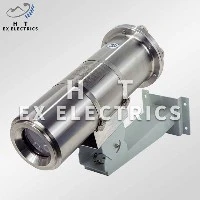

If you've ever worked in a high-risk environment like an oil refinery, chemical plant, or offshore drilling rig, you know that every second counts when it comes to safety. A tiny spark, a misreading of equipment, or an unobserved leak can turn a routine operation into a disaster in minutes, or even seconds. That's why explosion-proof cameras aren't just another security tool-they're a critical line of defense, designed to keep watch over areas where standard electronics would be a fire or explosion hazard. One of the most common questions we get here at our explosion-proof camera supplier is: What is the response time of explosion-proof cameras? It's not a simple number to throw out, because response time depends on a mix of engineering design, regulatory standards, and how the camera is set up for its specific environment. Let's break this down in plain, practical terms, no jargon that doesn't matter to the people who actually use these cameras every day.
First, let's define what "response time" actually means in the context of explosion-proof cameras, because it's not the same as the refresh rate you'd look for in a home security cam. For our industrial clients, response time has two key parts: how fast the camera itself captures and transmits an image or alert when something goes wrong, and how quickly that signal is received and acted on by the control room or monitoring team. Both parts are tied directly to the camera's explosion-proof rating, which isn't just a label-it's tested to make sure it won't ignite flammable gases or dust even if there's an internal fault. That testing adds a layer of complexity that doesn't exist for regular cameras, so their response times are calibrated for safety as much as performance.
Let's start with the camera's core processing speed, because that's the foundation of its response. Most standard explosion-proof cameras, like the general-purpose Explosion Proof Security Camera we design for mid-risk industrial sites, have a native frame rate of 15 to 30 frames per second (FPS). For reference, a standard smartphone camera is usually 30 FPS or higher, but industrial explosion-proof models have to balance speed with power efficiency, since they often run on low-voltage, intrinsically safe power supplies. The capture time for a single frame is the inverse of the frame rate, so at 30 FPS, that's roughly 33 milliseconds per frame. That's fast enough to catch fast-moving events like a valve blowout or a moving piece of equipment malfunctioning, right? But wait-there's a catch here. In hazardous areas, explosion-proof cameras have to go through a process called intrinsic safety certification, which limits the amount of electrical energy they can use to prevent sparks. That means some lower-end explosion-proof cameras might be locked to a lower frame rate, like 10 FPS, to stay within certification limits, which pushes their frame capture time to 100 milliseconds. That's still fast for most monitoring needs, but it's important to match the camera's frame rate to your specific risk. For example, if you're monitoring a high-speed conveyor belt in a grain facility (a dust hazard), you'd want a higher FPS to avoid missing a blockage that could spark a dust explosion.


Next, the transmission delay, which is how long it takes for that captured frame to get from the camera to the control room. This is where a lot of people get tripped up, because explosion-proof cameras use special communication cabling or wireless systems that are also certified for hazardous areas. Wired transmission over intrinsically safe Ethernet has a delay of less than 100 milliseconds for standard data, which is negligible for most use cases. Wireless options, like Wi-Fi with intrinsic safety certification, have a slightly higher delay, around 150 to 200 milliseconds, but that's still well within the threshold for timely alerts. Where transmission delay can get tricky is in remote sites, like offshore oil rigs, where cameras might connect to a satellite network. In those cases, the round-trip delay can jump to 500 milliseconds or more, but that's not a flaw in the camera itself-it's a limitation of the network, and it's important to account for that when setting up your system.
Now, let's talk about alert response time, which is what really matters when something is wrong. Most modern explosion-proof cameras, like our Explosion-Proof AI Camera, come with built-in analytics that can detect anomalies like smoke, unauthorized personnel, or equipment temperature spikes, instead of just sending static images. The response time for an AI alert starts when the camera's processor picks up the anomaly in a frame, processes it, and sends an alert to the control room. For high-contrast, obvious anomalies (like a flame near a pipeline), this can be as fast as 50 milliseconds. For more subtle anomalies, like a small leak that's just starting to release flammable gas, the AI might need to analyze 2 to 5 frames to confirm the event, which adds 66 to 165 milliseconds to the delay. Combine that with the transmission delay, and total alert response time for an explosion-proof AI camera is usually between 200 and 500 milliseconds. That's fast enough that a control room operator can have an alert on their screen before a small leak turns into a large fire, which is the whole point of these cameras.
But wait-what about different types of explosion-proof cameras? Not all of them are the same, right? For low-light hazardous areas, like storage tanks or underground mines, you'd use an infrared explosion-proof camera, and that can have a slightly different response time. Our Intrinsically Safe Infrared Camera, designed for these dim, high-risk spaces, uses infrared LEDs to illuminate the scene, and its frame rate is optimized for low-light sensitivity. The response time here is still within the same general range, around 200 to 400 milliseconds, but the infrared lighting means it can detect events that a standard visible-light explosion-proof camera would miss entirely. For example, a gas leak that's invisible to the naked eye can be picked up by an infrared camera's thermal imaging, and the alert time is almost identical to a visible-light camera because the processing is just as fast.
Another common type is the Intrinsically Safe Explosion Proof Camera, which is designed for even the most severe hazardous locations, like areas with hydrogen gas (which has a very low ignition energy, meaning even a tiny spark can set it off). Intrinsically safe cameras have very limited power, so their frame rate is often capped at 15 FPS instead of 30, which adds a bit of delay. But even with that, their alert response time is only about 100 milliseconds longer than a standard explosion-proof camera, because the certification process ensures that their processing and power systems are optimized for speed without sacrificing safety. For these critical hydrogen environments, even a 300-millisecond response time can mean the difference between a controlled shut-down and a catastrophic explosion.
Now, let's get real about what response time means for your operations, because the numbers only matter if they fit your specific needs. For example, a chemical plant that's monitoring a stationary process (like a reactor that takes hours to heat up) might be fine with a lower frame rate, since there's no fast-moving event to catch. But an oil and gas site that has moving equipment, like pumps, pipelines, and loading arms, needs a faster response time to catch issues before they escalate. That's why we recommend the Explosion Proof Camera for Oil and Gas be paired with our AI analytics module, which cuts down on false alerts and speeds up the actual alert time by only sending notifications when a real risk is detected.
A lot of first-time buyers ask us if a faster response time is always better. The answer is: mostly, but not at the cost of safety. Explosion-proof cameras have to go through rigorous testing to meet standards like ATEX, IECEx, and NEC, so any modification to speed (like cranking up the frame rate beyond certification limits) would void that rating and make the camera unsafe for use in hazardous areas. That's why you can't just buy a regular high-speed camera and put it in a refinery-it won't pass the spark-safety tests, and it could cause an explosion instead of preventing one. All of our cameras, from the general security models to the specialized infrared and AI ones, are tested to make sure their response times are both fast enough for operational needs and compliant with all safety regulations.
Another factor that affects response time is the camera's setup and maintenance. Even the fastest explosion-proof camera will have delayed alerts if its lens is covered in dust, grime, or oil, which is common in industrial environments. We always advise our clients to set up regular maintenance checks to clean camera lenses, update firmware, and test alert systems to make sure response times stay within the expected range. For example, a lens covered in thick grease can double the time it takes for the AI to detect an anomaly, because the camera can't get a clear image. That's a simple fix, but it's easy to overlook when you're focused on other parts of operations.
Let's put this all together with a real example from a recent project we worked on. A mid-sized oil refinery in Texas reached out to us a year ago, saying their old explosion-proof cameras were missing small gas leaks because their response time was too slow. We replaced their old 10 FPS cameras with our Explosion Proof Security Camera with AI analytics, and adjusted their network setup to reduce transmission delay. The result? Their alert response time dropped from over 2 seconds to 350 milliseconds, and they caught 12 small gas leaks in the first six months of use-leaks that would have gone unnoticed until they became full-blown hazards. The refinery's safety team told us that this cut their response time for emergency shut-downs by nearly 70%, because they didn't have to wait for slow alerts from their old systems.
If you're in the market for an explosion-proof camera, don't just fixate on the "fastest response time" number. Think about your specific environment: what kind of hazards are you dealing with? How fast do you need to detect an event? Do you need low-light or thermal capabilities? For example, a grain handling facility with dust hazards will want a higher frame rate to catch conveyor jams, while a chemical storage facility with static risks might prioritize alert accuracy over absolute speed. Our team can help you match the right camera to your needs, whether that's our general Explosion Proof Security Camera, our Intrinsically Safe Infrared Camera for low-light mines, or our AI-powered model for high-traffic hazardous sites.
At the end of the day, the response time of an explosion-proof camera is a balance of engineering, safety certification, and real-world operational needs. It's not a random number pulled out of thin air-it's calibrated to keep people and facilities safe, while giving you the timely alerts you need to run your operations smoothly. If you're ready to learn more about how our explosion-proof cameras can meet your safety and response time requirements, we'd be happy to discuss your site's specific needs.