




If you've ever stood in a manufacturing plant, a mine site, or a warehouse control room, staring at a wall of flickering screens and real-time data feeds, you've probably seen a tiny but critical metric: equipment on/off sensor signal strength. For those of us who design, test, and supply these sensors for a living, this isn't just a technical number-it's the difference between a smooth production shift and an unplanned, costly downtime event. Over the past 12 years as an on/off sensor supplier, I've fielded hundreds of calls from operators, maintenance teams, and plant managers asking the same question: What is signal strength, really, and why does it matter for our on/off sensors? Let's break this down in plain, practical terms, no jargon that makes your head hurt.
First, let's define exactly what an equipment on/off sensor does, because signal strength only makes sense once you understand the sensor's job. On/off sensors (sometimes called proximity sensors, limit switches, or load-based on/off detectors, depending on the use case) are tasked with a single core function: they tell a control system whether a piece of equipment is running or idle. That might be a conveyor belt in a grain elevator, a pump in a wastewater treatment plant, a longwall shearer in a coal mine, or a packaging machine in a food factory. The sensor sends a small electrical or electromagnetic signal back to the PLC (programmable logic controller) or SCADA system: "Equipment is on" or "Equipment is off." Signal strength is the measure of how well that signal travels from the sensor to the receiver (the control system) without being distorted, lost, or interrupted.
You'd think that a sensor checking a simple on/off state would have a simple, strong signal-but that's not always the case. Let's get into the physics, but keep it relatable. Most on/off sensors fall into two categories: wired and wireless. Wired sensors use physical copper cables to carry the signal, so their strength is determined by cable length, gauge, insulation quality, and how many other signals are running alongside them. Wireless sensors, which are growing in popularity for hard-to-wire locations like remote mine or solar farm equipment, use radio frequencies (RF) or Bluetooth, so their signal strength depends on distance, physical barriers (metal walls, dust, water), and RF interference from nearby equipment like motors, radios, or other sensors.
But here's the key point for anyone relying on these sensors: signal strength isn't just about the numbers on a screen. It's about reliability. A weak signal doesn't just mean the control system is guessing at equipment status-it can lead to catastrophic errors. I remember a mine operator in West Virginia calling me three years ago, panicking because their longwall shearer's on/off sensor was sending a weak, intermittent signal. The control system would occasionally think the shearer was idle when it was actually running, leading the entire production line to shut down unnecessarily twice a week, costing them $12,000 in lost output each incident. That's the kind of real-world impact that makes signal strength non-negotiable, not just a tech spec.
So what counts as "good" signal strength for an on/off sensor? Let's break it down by sensor type, because the answer varies depending on how the sensor works.

For wired inductive or capacitive on/off sensors (the most common for industrial equipment), signal strength is measured in milliamps (mA) or voltage (V). A typical output for a working on/off signal is between 10mA and 30mA for a DC system, or 12V to 24V AC for an AC system. If that signal drops below 5mA (or 2V for AC), that's a weak signal. Why? Because the resistance in the cable or any interference is eating away at the signal. For example, a 1,000-foot run of 22-gauge copper wire will cause a 10% voltage drop, so a 24V signal might drop to 21.6V by the time it reaches the controller-right at the edge of what's considered a reliable level.
For wireless on/off sensors, which are often used in locations where running cable is impossible or prohibitively expensive (think: cranes in a busy port, or equipment on a rotating arm), signal strength is measured in dBm (decibels relative to one milliwatt). A strong signal is anything above -60 dBm; a weak signal is between -70 dBm and -85 dBm, and anything below -85 dBm is usually too unreliable for consistent on/off detection. That -60 dBm number isn't arbitrary-field tests show that at that strength, the wireless sensor can reliably send its on/off command 99.9% of the time, even in environments with RF noise. I've seen mine operators install wireless on/off sensors for their shuttle cars, only to have them fail because they mounted the sensor too far from the receiver, leading to a signal of -78 dBm-enough to drop the signal when the car is near a large rock formation.
Now, let's talk about what causes weak signal strength for on/off sensors, because that's the part that most people don't realize. For wired sensors, the #1 culprit is distance and cable damage. A frayed cable, or a cable run that's longer than the sensor's rated maximum, will degrade the signal every time. Another common issue is electromagnetic interference (EMI) from nearby heavy equipment. A motor running next to a sensor cable can emit a magnetic field that disrupts the on/off signal, turning a strong 20mA signal into a flickering 7mA one. For wireless sensors, the biggest issues are physical obstructions (metal, concrete, dust, and even water) and competing RF signals from other industrial devices. For example, if you have multiple sensors in the same facility all transmitting on the same frequency, they'll interfere with each other, causing signal strength to drop for all of them.
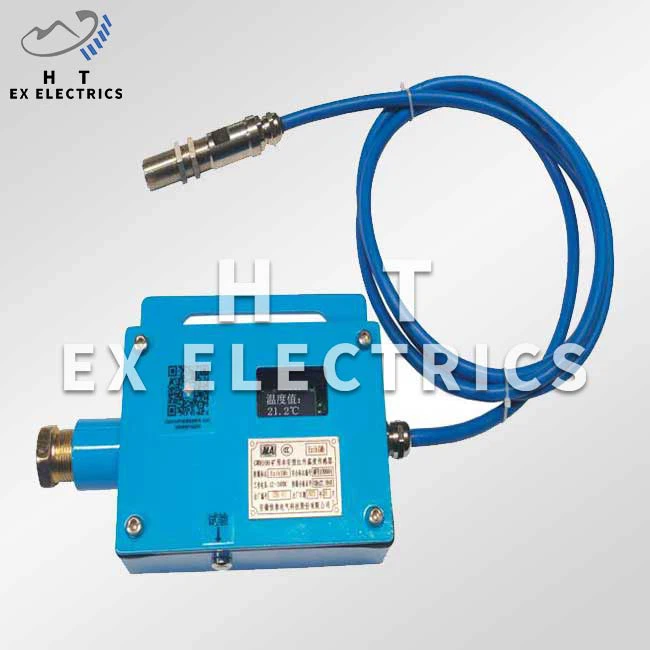
This is where it's important to note that not all on/off sensors are made the same. For hazardous environments-think coal mines, chemical plants, or grain silos where explosive dust or gas is present-you need intrinsically safe sensors, which are designed to prevent sparks that could ignite those materials. I've been asked more than once if intrinsically safe sensors have weaker signal strength than standard sensors, and the short answer is: no, not when installed correctly. Intrinsically safe sensors are calibrated to maintain consistent, reliable signal strength while operating at low power levels, which is the key to their safety. If you're working in a hazardous location, choosing a certified intrinsically safe sensor isn't just a compliance issue-it's the only way to ensure your on/off signal is both safe and strong. For more on how these sensors work for industrial environments, you can check out our page for the Intrinsically Safe Coal Level Sensor, which is designed for the dusty, RF-heavy conditions of underground mines. We also offer other intrinsically safe sensors tailored to specific use cases, like the Tension Sensor for conveyor belt monitoring, the Intrinsically Safe Temperature Sensor for process control, the Intrinsically Safe Nir Temperature Sensor for material inspection, and the Intrinsically Safe Speed Sensor for rotating equipment-all built to deliver consistent signal strength in harsh environments.
Wait, but what about dynamic equipment? Like a conveyor belt that's constantly vibrating, or a pump that's moving up and down? Does that affect signal strength? Absolutely. Vibration can damage wired sensor connections over time, leading to intermittent signal drops. For wireless sensors, vibration can sometimes cause the antenna to shift slightly, which weakens the RF signal. That's why we design many of our on/off sensors with ruggedized housings and vibration-dampening mounting brackets to keep connections tight and antennas aligned, even on equipment running 24/7 in a foundry or a quarry.
Let's go back to that mine example I mentioned earlier. The operator had installed a standard wired on/off sensor, but the cable ran 1,200 feet from the shearer to the control room-500 feet longer than the sensor's rated maximum. The voltage drop across that cable was 18%, so the on/off signal was only reaching 19.7V, just above the 20V threshold they needed for reliable detection. Once we replaced that sensor with a higher-voltage model rated for 1,500-foot cable runs, the signal strength jumped to 23.8V, and they haven't had an unplanned shutdown from signal issues in the two years since. That's the kind of practical solution that comes from understanding what signal strength really means for on/off sensors, not just reading a spec sheet.
Another common misconception: people think "signal strength" is a fixed value, but it's actually dynamic. A sensor's signal strength can change throughout the day, depending on how much equipment is running nearby, how much dust is in the air, or even the temperature of the sensor or the cable. For example, in a cold winter plant, a copper cable can become stiffer, leading to a loose connection and a slight drop in signal strength. In a hot summer plant, the same cable can expand, and insulation can break down, also leading to signal degradation. That's why regular testing of signal strength is critical-we recommend checking on/off sensor signals at every scheduled maintenance (usually every 30 to 90 days, depending on the environment) to catch weak signals before they cause downtime.
So how do you test signal strength for your on/off sensor? For wired sensors, it's simple: use a multimeter to measure the output voltage or current at the sensor's terminal when the equipment is on, and when it's off. If the difference between on and off is less than 15mA (for current) or 5V (for voltage), that's a sign of a weak signal. For wireless sensors, most modern systems have a signal strength indicator in the control software-look for a reading that stays above -60 dBm when the equipment is operating. If it's dropping below -70 dBm consistently, you might need to move the receiver, switch to a different RF frequency, or install a signal repeater.
Now, let's get to the big question: How do you ensure your on/off sensor has the right signal strength for your application? The first step is to match the sensor to your environment. If you're in a hazardous area, don't risk a standard sensor-choose an intrinsically safe one, like the ones we specialize in. Next, pay attention to cable length for wired sensors, or distance and obstructions for wireless ones. Don't just go by the sensor's listed maximum range-add a 20% buffer for environmental factors like interference or obstructions. Finally, invest in regular testing and maintenance. I've seen too many plants skip this step, only to pay for costly downtime that could have been avoided with a $5 multimeter check every quarter.
At the end of the day, signal strength for an equipment on/off sensor is about reliability. It's about knowing that when your conveyor belt is running, the control system knows it-and when it's not, it knows that too. For operators, that means less stress, fewer unplanned shutdowns, and lower operating costs. For us as sensor suppliers, that's what matters most: building sensors that deliver consistent, strong signals even in the toughest conditions. If you're dealing with on/off sensor signal issues in your facility, or you're looking to upgrade to more reliable sensors for your equipment, we're here to help. Reach out to our team to discuss your application, get a custom recommendation, and learn more about how our line of intrinsically safe sensors and on/off solutions can keep your operations running smoothly.