


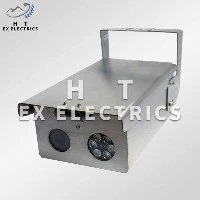
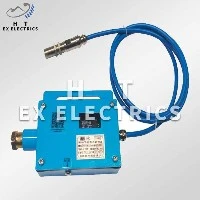

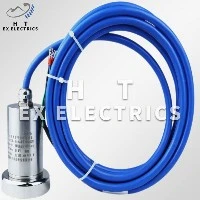
Hey there, folks! I'm an Equipment On/Off Sensor supplier, and I've been getting a bunch of questions lately about whether our sensors can be used in hospitals. Well, let's dive right into it and see if these nifty sensors have a place in the healthcare world.
First off, let's talk about what an Equipment On/Off Sensor does. Simply put, it's a device that can detect whether a piece of equipment is turned on or off. It's like having a little detective that keeps an eye on your gear's power status. This might seem like a simple thing, but in a hospital setting, it can be super useful.
One of the biggest challenges in hospitals is managing energy consumption. There are tons of electrical devices running 24/7, from patient monitors to MRI machines. Using an Equipment On/Off Sensor, hospital staff can easily track which equipment is in use and which is sitting idle. This way, they can turn off the unnecessary devices, which not only saves energy but also cuts down on costs in the long run.
Another important aspect is patient safety. In a hospital, the proper functioning of medical equipment is crucial. An Equipment On/Off Sensor can be integrated with the hospital's monitoring system. If a vital piece of equipment unexpectedly shuts off, the sensor can send an immediate alert to the staff. This allows them to quickly respond to the situation and ensure that the patient's care is not compromised.
Now, let's consider the environment in a hospital. It's a place filled with sensitive electronic equipment and a lot of interference. That's why our sensors are designed to be highly reliable and resistant to electromagnetic interference. They can work in harsh conditions without giving false readings. This reliability is essential in a hospital where accurate information can mean the difference between life and death.
But it's not just about big machines. Even smaller equipment like infusion pumps and nebulizers can benefit from an On/Off Sensor. These devices are used directly on patients, and any interruption in their operation can be a serious issue. By monitoring their power status, nurses can be proactive in ensuring that the treatment continues smoothly.
Let's also touch on the compatibility of our sensors with other hospital systems. We understand that hospitals have complex IT infrastructure. Our Equipment On/Off Sensors can be easily integrated with existing hospital management software. This means that the data collected by the sensors can be analyzed and used to make informed decisions about equipment usage and maintenance.
Now, I know what you might be thinking. "What about the safety of these sensors in a hospital?" Well, we've got that covered. Our sensors are designed to meet the highest safety standards. They are built with materials that are non-toxic and can be easily cleaned and disinfected. This is important in a hospital where infection control is a top priority.
In addition to the general benefits, our sensors also offer some unique features. For example, they can provide historical data on equipment usage. This data can be used to analyze trends and predict when a piece of equipment might need maintenance. By being proactive in maintenance, hospitals can avoid costly breakdowns and ensure that their equipment is always in top condition.
Let's talk about some related sensors that might also be useful in a hospital. We have an Intrinsically Safe Temperature Sensor. In a hospital, maintaining the right temperature is crucial for storing medications and samples. This sensor can accurately monitor the temperature and send alerts if there are any deviations.
We also offer an Intrinsically Safe Coal Level Sensor. Although coal might not be the first thing that comes to mind when you think of a hospital, in some areas, coal is used for heating. This sensor can help ensure that the coal levels are properly maintained, which is important for the overall heating system of the hospital.
If you're dealing with equipment that involves tension, like some surgical tools or patient support devices, our Tension Sensor can be a great addition. It can accurately measure the tension and provide real - time data, which is essential for the proper functioning of these devices.
And for equipment that might be prone to vibration, such as some laboratory equipment or large imaging machines, our Intrinsically Safe Vibration Sensor can detect abnormal vibrations. This can help in early detection of potential problems and prevent equipment failure.
So, to sum it all up, an Equipment On/Off Sensor definitely has a place in a hospital. It can help with energy management, patient safety, equipment maintenance, and overall hospital efficiency. If you're in charge of managing a hospital or are involved in the procurement of medical equipment, I highly recommend considering our Equipment On/Off Sensors.


If you have any questions or want to discuss a potential purchase, don't hesitate to reach out. We're here to help you make the best decision for your hospital's needs.