


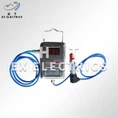

Hey there! As a supplier of Intrinsically Safe Photo Sensors, I often get asked about the maximum detection distance of these nifty devices. So, I thought I'd take a deep dive into this topic and share some insights with you.
First off, let's understand what an intrinsically safe photo sensor is. These sensors are designed to be used in hazardous environments where there's a risk of explosion, like in oil and gas fields, chemical plants, and mines. They're built to ensure that any electrical energy they produce won't cause a spark that could ignite the surrounding flammable gases or dust.


Now, the maximum detection distance of an intrinsically safe photo sensor can vary quite a bit. It depends on several factors, and I'll break them down for you.
Factors Affecting Detection Distance
Sensor Type
There are different types of intrinsically safe photo sensors, such as through-beam sensors, retro-reflective sensors, and diffuse sensors. Through-beam sensors have the longest detection distances. In these sensors, the emitter and the receiver are placed opposite each other. The emitter sends out a beam of light, and the receiver detects it. When an object blocks the beam, the sensor triggers a signal. These sensors can have detection distances of up to several meters, sometimes even tens of meters.
Retro-reflective sensors work by sending a beam of light towards a reflector. The light bounces back from the reflector to the sensor's receiver. If an object interrupts the light path between the sensor and the reflector, the sensor detects the change. Their detection distances are usually a bit shorter than through-beam sensors, typically ranging from a few centimeters to a few meters.
Diffuse sensors, on the other hand, emit a light beam, and the light reflects off an object and back to the sensor's receiver. These sensors have the shortest detection distances, usually up to a few meters at most. This is because the amount of light that bounces back to the receiver depends on the object's reflectivity, size, and shape.
Light Source
The type of light source used in the sensor also plays a big role. Infrared light is commonly used in intrinsically safe photo sensors. It's invisible to the human eye and has some advantages. For example, it's less affected by ambient light compared to visible light. Some sensors use laser light sources. Lasers can produce a very focused and intense beam of light, which allows for longer detection distances. However, using lasers also comes with some safety considerations, especially in hazardous environments.
Ambient Conditions
The environment where the sensor is used can have a significant impact on its detection distance. In a clean and dust-free environment, the sensor can detect objects at its maximum specified distance. But if there's a lot of dust, smoke, or fog in the air, the light beam can be scattered or absorbed, reducing the detection distance. High humidity can also affect the performance of the sensor. Moisture in the air can cause the light to refract or scatter, making it harder for the receiver to detect the light signal.
Object Characteristics
The size, shape, and reflectivity of the object being detected matter too. A large, flat, and highly reflective object will be easier to detect at a longer distance compared to a small, irregularly shaped, and non-reflective object. For example, a shiny metal plate will reflect more light back to the sensor than a black rubber ball of the same size.
Real - World Examples
Let's look at some real - world scenarios to understand how these factors interact. In an oil refinery, where there's a risk of explosive gases, through - beam intrinsically safe photo sensors might be used to detect the presence of large equipment or vehicles moving in a particular area. These sensors can be set up with a detection distance of 10 - 15 meters. The long distance is possible because the environment is relatively clean, and the objects to be detected are large and have a certain level of reflectivity.
In a chemical plant where there might be some dust and fumes in the air, a retro - reflective sensor could be used to monitor the movement of conveyor belts. The detection distance might be limited to 2 - 3 meters due to the ambient conditions.
Comparing with Other Intrinsically Safe Sensors
It's also interesting to compare the detection distances of intrinsically safe photo sensors with other types of intrinsically safe sensors. For example, Intrinsically Safe Radar Level Sensor is used to measure the level of liquids or solids in a tank. These sensors can have detection distances of several meters, depending on the tank size and the nature of the material being measured. They work based on radar technology, which is different from the light - based technology of photo sensors.
Intrinsically Safe Nir Temperature Sensor is used to measure temperature in hazardous environments. These sensors don't really have a "detection distance" in the same sense as photo sensors. They measure the temperature of an object by detecting the near - infrared radiation emitted by it.
Intrinsically Safe Pressure Sensor is used to measure pressure in pipes or vessels. Again, it doesn't have a detection distance like photo sensors. It measures the pressure exerted on its sensing element.
How to Maximize Detection Distance
If you want to get the maximum detection distance out of your intrinsically safe photo sensor, here are some tips. First, choose the right type of sensor for your application. If you need a long - distance detection, a through - beam sensor is probably the best choice. Second, make sure the sensor is installed correctly. The emitter and receiver (or the reflector in the case of retro - reflective sensors) should be properly aligned. Any misalignment can reduce the detection distance.
Keep the sensor clean. Regularly wipe off any dust or dirt that might accumulate on the sensor's lens or the reflector. If possible, control the ambient conditions. For example, use air filters to reduce the amount of dust in the air around the sensor.
Conclusion
So, to answer the question of what the maximum detection distance of an intrinsically safe photo sensor is, it really depends on a variety of factors. Through - beam sensors can have the longest distances, up to tens of meters in ideal conditions. Retro - reflective sensors can detect objects at distances of a few centimeters to a few meters, and diffuse sensors have the shortest detection distances, usually up to a few meters.
If you're in the market for an intrinsically safe photo sensor or have any questions about their detection distances and how they can fit into your application, don't hesitate to reach out. We're here to help you find the right sensor for your needs and ensure it performs at its best in your hazardous environment. Whether you're in the oil and gas industry, chemical manufacturing, or any other field where safety is a top priority, we've got you covered.
References
- "Industrial Sensors Handbook" by Sensor Experts Group
- Technical documentation from various intrinsically safe sensor manufacturers