


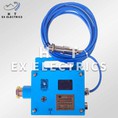


As a supplier of Equipment On/Off Sensors, I often get asked about the maximum load these sensors can handle. It's a crucial question, especially for those who are looking to use these sensors in various industrial and commercial applications. In this blog, I'll break down what the maximum load means, factors that affect it, and how you can determine the right sensor for your specific needs.
What Does "Maximum Load" Mean?
When we talk about the maximum load an Equipment On/Off Sensor can handle, we're referring to the maximum amount of electrical current or power that the sensor can safely manage without getting damaged or malfunctioning. This load is typically measured in amperes (A) for current and watts (W) for power. Understanding this limit is essential because if you exceed it, the sensor might fail, leading to potential safety hazards and costly downtime.
Factors Affecting the Maximum Load
Several factors can influence the maximum load capacity of an Equipment On/Off Sensor. Let's take a closer look at some of the key ones:
Sensor Design and Construction
The internal components and design of the sensor play a significant role in determining its load capacity. High - quality sensors with robust circuitry and components are generally able to handle higher loads. For example, sensors with thick copper traces on the printed circuit board (PCB) can carry more current without overheating.
Temperature
Temperature has a big impact on a sensor's performance and load - handling ability. As the temperature rises, the resistance of the sensor's components increases, which can limit the amount of current it can carry. That's why many sensors are rated for specific temperature ranges. If you operate a sensor outside of its recommended temperature range, its maximum load capacity may be reduced.
Type of Load
The type of load connected to the sensor also matters. Resistive loads, like heaters, behave differently from inductive loads, such as motors. Inductive loads can generate back - EMF (electromotive force) when the circuit is opened or closed, which can put additional stress on the sensor. So, a sensor that can handle a certain load of a resistive type may not be able to handle the same load if it's inductive.
Determining the Right Sensor for Your Load
Now that we understand the factors affecting the maximum load, how do you choose the right Equipment On/Off Sensor for your application?
Know Your Load Requirements
First, you need to accurately determine the electrical requirements of your load. Measure the current and power consumption of the device you want to control with the sensor. If you're dealing with a complex system, it might be a good idea to consult an electrician or an engineer to get an accurate reading.


Consider the Environment
Think about the environment where the sensor will be used. If it's a high - temperature or high - humidity environment, you'll need a sensor that can withstand these conditions. Some sensors are designed to be intrinsically safe, which means they can operate safely in hazardous environments. For example, you can check out our Intrinsically Safe Infrared Temperature Sensor, Intrinsically Safe Speed Sensor, and Intrinsically Safe Laser Distance Sensor for applications in potentially explosive atmospheres.
Check the Sensor Ratings
Always check the manufacturer's specifications for the sensor. Look for the maximum current and power ratings, as well as the recommended operating temperature and humidity ranges. Make sure these ratings match your application requirements.
Real - World Examples
Let's look at a couple of real - world examples to illustrate how important it is to choose the right sensor for the load.
Example 1: A Small - Scale Lighting System
Suppose you're setting up a small lighting system in a retail store. The lights have a combined power consumption of 500 watts. You need to choose an Equipment On/Off Sensor that can handle this load. If you pick a sensor with a maximum load rating of only 300 watts, it will likely overheat and fail. So, you should look for a sensor with a rating of at least 500 watts or higher to ensure reliable operation.
Example 2: An Industrial Motor
In an industrial setting, you might have a motor that draws a large amount of current. Motors are inductive loads, so they require special consideration. Let's say the motor has a starting current of 20 amperes and a running current of 10 amperes. You need to choose a sensor that can handle both the starting and running currents without getting damaged. A sensor with a low - current rating will not be suitable for this application.
How Our Equipment On/Off Sensors Can Help
At our company, we offer a wide range of Equipment On/Off Sensors with different load capacities to meet various application needs. Our sensors are designed and tested to ensure high performance and reliability. We use high - quality components and advanced manufacturing techniques to make sure our sensors can handle the maximum loads specified in their ratings.
Whether you're looking for a sensor for a small - scale application or a large - scale industrial project, we can help you find the right one. Our team of experts is always available to answer your questions and provide technical support.
Let's Talk
If you're interested in purchasing Equipment On/Off Sensors or need more information about our products, we'd love to hear from you. Contact us to discuss your specific requirements, and we'll work with you to find the best solution for your needs.
References
- Electrical Engineering Handbook, Third Edition. CRC Press.
- Sensor Technology Handbook, Fourth Edition. Elsevier.