


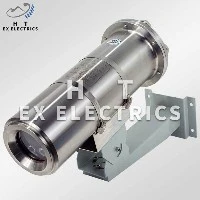
As a supplier of Intrinsically Safe Laser Sensors, I'm often asked about the key features that make these sensors stand out in the market. In this blog post, I'll delve into the essential characteristics that define a high - quality intrinsically safe laser sensor, along with some relevant insights.
1. Intrinsic Safety
The most fundamental feature of an intrinsically safe laser sensor is, as the name implies, its intrinsic safety. In hazardous environments where there is a risk of explosion due to the presence of flammable gases, vapors, or dusts, these sensors are designed not to generate enough energy to cause an ignition.
This is achieved through careful design and engineering. For example, the electrical components are carefully selected and configured to limit the amount of electrical energy that can be released. The power supply is regulated to ensure that even in the event of a fault, the energy levels remain below the ignition threshold of the surrounding hazardous substances. Intrinsic safety is certified by international standards such as ATEX and IECEx, which provide strict guidelines for the design and testing of equipment used in explosive atmospheres.
2. High - Precision Measurement
Laser sensors are known for their ability to provide high - precision measurements. An intrinsically safe laser sensor is no exception. These sensors use laser technology to accurately measure distances, angles, and other physical parameters.
The laser beam emitted by the sensor is highly focused, allowing for precise targeting. The time - of - flight principle is commonly used in many laser sensors. By measuring the time it takes for the laser beam to travel to the target and back, the sensor can calculate the distance with a high degree of accuracy. This high - precision measurement is crucial in applications such as industrial automation, where even small errors can lead to significant problems in the manufacturing process.
3. Robustness and Durability
In industrial and hazardous environments, the sensor needs to be able to withstand harsh conditions. Intrinsically safe laser sensors are built to be robust and durable. They are often housed in a rugged enclosure that can protect the internal components from dust, moisture, vibration, and mechanical shock.
The materials used in the construction of the sensor are carefully chosen for their resistance to corrosion and wear. For example, the outer casing may be made of stainless steel or a high - strength plastic that can withstand exposure to chemicals and extreme temperatures. This durability ensures that the sensor can operate reliably over a long period of time, reducing the need for frequent replacements and maintenance.
4. Wide Range of Detection
Another important feature of an intrinsically safe laser sensor is its wide range of detection. These sensors can detect objects at various distances, from a few centimeters to several meters, depending on the model.
This wide range of detection allows for flexibility in different applications. For example, in a warehouse, a laser sensor with a long - range detection capability can be used to monitor the movement of large vehicles or the inventory levels on high shelves. On the other hand, in a more precise manufacturing process, a short - range laser sensor can be used for detailed measurement and positioning tasks.
5. Compatibility and Integration
In the modern industrial landscape, it is essential for sensors to be compatible with other equipment and systems. Intrinsically safe laser sensors are designed to be easily integrated into existing industrial automation systems.
They typically support standard communication protocols such as Modbus, Profibus, and Ethernet/IP, which allow for seamless data transfer between the sensor and other devices in the system. This compatibility simplifies the installation and configuration process, as well as enabling real - time data monitoring and analysis.
6. Safety Feedback and Monitoring
Intrinsically safe laser sensors often come with built - in safety feedback and monitoring features. These features allow the user to continuously monitor the status of the sensor and ensure its safe operation.
For example, the sensor may have a fault detection mechanism that can detect issues such as a broken laser beam, a malfunctioning power supply, or a problem with the internal electronics. When a fault is detected, the sensor can send an alert signal to the control system, allowing for prompt action to be taken. This helps to prevent potential safety hazards and maintain the reliability of the entire system.


Related Products
If you are interested in other types of intrinsically safe sensors, we also offer a variety of options. You can check out our Intrinsically Safe Photo Sensor, which is suitable for applications where light detection is required. Our Intrinsically Safe Infrared Temperature Sensor is ideal for measuring temperature in hazardous environments. The Mine Temperature Sensor is specifically designed for use in mines, providing accurate temperature monitoring. And for speed measurement in explosive atmospheres, our Intrinsically Safe Speed Sensor is a great choice. If you are specifically looking for a laser - based distance measurement solution, our Intrinsically Safe Laser Distance Sensor offers high - precision and reliable performance.
Conclusion
In summary, an intrinsically safe laser sensor combines the benefits of intrinsic safety, high - precision measurement, robustness, wide - range detection, compatibility, and safety feedback. These key features make it an indispensable tool in various industrial applications, especially those in hazardous environments.
If you are in the market for an intrinsically safe laser sensor or any of our related products, we invite you to contact us for a detailed discussion about your specific requirements. Our team of experts is ready to provide you with the best solutions and support.