



In the numerous industrial applications, the demand for accurate and reliable speed measurement is crucial, especially in high - speed environments. As a supplier of Intrinsically Safe Speed Sensors, we have in - depth knowledge not only about the advantages but also the limitations of these sensors when applied in high - speed scenarios.
Understanding Intrinsically Safe Speed Sensors
First, it is essential to understand what an Intrinsically Safe Speed Sensor is. An intrinsically safe device is designed in such a way that it does not generate enough electrical or thermal energy to cause ignition in a hazardous area. In the case of speed sensors, they are engineered to measure the rotational speed of a shaft or a moving object while maintaining the safety requirements in explosive atmospheres.
These sensors are widely used in industries such as oil and gas, chemical, and mining, where the presence of flammable gases, vapors, or dusts makes the use of non - intrinsically safe equipment a significant risk. However, when it comes to high - speed applications, there are several limitations that need to be considered.
Response Time Limitations
One of the primary limitations of using an intrinsically safe speed sensor in high - speed applications is the response time. The response time of a sensor refers to the time it takes for the sensor to detect a change in the measured variable and produce a corresponding output. In high - speed applications, the rotational speed of the object can change rapidly, and the sensor needs to be able to keep up with these changes.
Intrinsically safe sensors are designed with safety in mind, which often means that they have additional electrical components and circuits for limiting energy. These components can introduce a certain amount of delay in the sensor's response. For example, resistors and capacitors used for energy limitation can slow down the electrical signals passing through the sensor. As a result, in high - speed applications where rapid changes in speed occur, the sensor may not be able to accurately track these changes, leading to measurement errors.
Signal Conditioning and Noise
In high - speed applications, the quality of the electrical signals generated by the speed sensor is of utmost importance. Intrinsically safe speed sensors produce relatively weak electrical signals. To make these signals usable for further processing, signal conditioning is required. Signal conditioning involves amplifying, filtering, and digitizing the signals.
However, in high - speed environments, there is often a high level of electromagnetic interference (EMI) and radio - frequency interference (RFI). The additional signal - conditioning circuits in intrinsically safe sensors can make them more susceptible to these interferences. The interference can distort the sensor signals, leading to inaccurate speed measurements. Even a small amount of noise in the signal can cause significant errors in high - speed applications where precision is critical.
Mechanical Wear and Tear
High - speed applications subject the sensors to a high degree of mechanical stress. Intrinsically safe speed sensors, like other sensors, rely on mechanical components such as gears, shafts, or bearings to function. These components can experience rapid wear and tear when operating at high speeds.
In addition, the high - speed rotation can generate excessive heat, which can further degrade the mechanical components of the sensor. For intrinsically safe sensors, the sealing and encapsulation used to meet safety requirements can also trap heat, making the problem worse. Over time, the mechanical wear can lead to reduced accuracy and reliability of the sensor, and eventually, it may even cause the sensor to fail.
Temperature and Environmental Limitations
Temperature is another factor that can limit the performance of intrinsically safe speed sensors in high - speed applications. High - speed operation often generates a significant amount of heat, which can raise the temperature of the sensor itself. Intrinsically safe sensors are designed to operate within a specific temperature range. If the temperature exceeds this range, it can affect the electrical properties of the sensor's components.
For example, the resistance of resistors and the capacitance of capacitors can change with temperature, which can in turn affect the sensor's output. In addition, high - temperature environments can also cause thermal expansion and contraction of the mechanical components, leading to misalignment and reduced accuracy.
In harsh industrial environments where high - speed applications are common, there may also be other environmental factors such as humidity, dust, and chemical exposure. These factors can also have a negative impact on the performance of intrinsically safe sensors. The sealing and protection mechanisms designed to ensure safety may not be sufficient to fully protect the sensor from these environmental conditions.
Comparison with Other Sensor Types
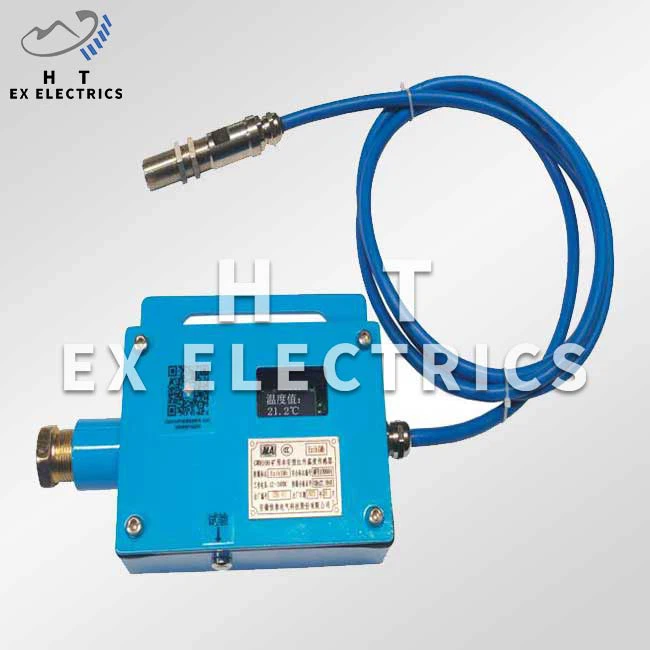
To better understand the limitations of intrinsically safe speed sensors in high - speed applications, it is useful to compare them with other types of sensors. For instance, Intrinsically Safe Nir Temperature Sensor and Intrinsically Safe Infrared Temperature Sensor are mainly used for temperature measurement and have different design considerations compared to speed sensors.
Non - intrinsically safe speed sensors can be designed without the strict energy - limitation requirements. As a result, they can often have faster response times, better signal - to - noise ratios, and higher tolerance to mechanical stress and temperature variations. In high - speed applications where safety is not a major concern, non - intrinsically safe sensors may be a more suitable choice.
Mitigating the Limitations
Although there are limitations to using intrinsically safe speed sensors in high - speed applications, there are also ways to mitigate these limitations. One approach is to use advanced signal - processing techniques. By using digital filters and algorithms, it is possible to reduce the impact of noise on the sensor signals. This can improve the accuracy of the speed measurements, especially in high - interference environments.
Another way is to optimize the mechanical design of the sensor. Using high - quality materials and precision manufacturing processes can reduce the wear and tear of the mechanical components. Improved heat - dissipation mechanisms can also be incorporated into the sensor design to prevent overheating.

In addition, proper installation and maintenance of the sensors are crucial. Ensuring that the sensors are installed in a vibration - free and well - ventilated environment can help to improve their performance. Regular calibration and inspection can also detect and correct any potential issues before they lead to serious problems.
Conclusion and Call to Action
In conclusion, while intrinsically safe speed sensors are essential for use in hazardous environments, they do have limitations when it comes to high - speed applications. These limitations include response - time delays, susceptibility to noise, mechanical wear, and temperature and environmental sensitivities. However, with the right strategies and proper care, these limitations can be mitigated to a certain extent.
If you are looking for an intrinsically safe speed sensor for your high - speed applications, our team of experts can provide you with in - depth advice and solutions. We understand the challenges you face and are committed to helping you find the best sensor for your specific needs. Contact us to start a procurement discussion and let us work together to ensure the success of your projects.
References
- Smith, J. (2018). Industrial Sensor Technology: Principles and Applications. New York: Industrial Press.
- Brown, A. (2020). Safety in Hazardous Environments: Intrinsically Safe Design. London: Safety Press.
- Johnson, R. (2019). High - Speed Measurement Techniques. Sydney: Engineering Publishing.