


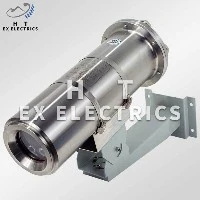
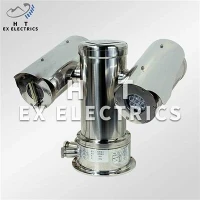

Intrinsically Safe Displacement Sensor
Your Professional Intrinsically Safe Displacement Sensor Supplier for Mining Applications
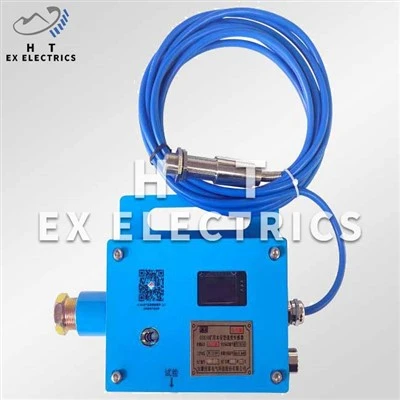
An intrinsically safe displacement sensor detects linear or angular movement of mechanical components in underground mining machinery and automated systems. In hazardous environments, selecting the correct displacement sensor involves more than matching the measurement range. The sensing technology, mechanical dimensions, electrical interface, installation layout, and explosion-protection requirements must align with the operational conditions of the site.



Selection & Technical Specification Matrix
|
Evaluation Parameter |
Technical Requirement to Confirm |
Engineering Consideration |
|
Measurement Range |
Minimum and maximum travel distance |
Ensure the physical stroke covers all operating positions with adequate mechanical safety margins. |
|
Sensing Technology |
Contact or non-contact measurement principle |
Select based on expected wear, movement speed, and mechanical installation space. |
|
Accuracy & Resolution |
Linearity, repeatability, and smallest detectable increment |
Match precision levels to the exact requirements of the control loop or safety interlock. |
|
Output Signal |
Analog (voltage or current), digital, or fieldbus interface |
Verify compatibility with the input card of the receiving PLC or control unit. |
|
Electrical Supply |
Nominal voltage and current consumption |
Confirm power supply stability and wiring loop resistance over long cable runs. |
|
Intrinsic Safety Parameters |
Maximum input voltage, current, power, capacitance, and inductance limits |
Match entity parameters with the approved associated apparatus or safety barrier. |
|
Ingress Protection |
IP rating (such as IP65, IP67, IP68) |
Protects internal circuitry against fine coal dust, water sprays, and condensation. |
|
Operating Temperature |
Ambient temperature range limit |
Verify performance stability under extreme thermal shifts in deep underground environments. |
Critical Factors for Sensor Evaluation
Measurement Range & Precision: Establishing the required travel distance, resolution, linearity, and repeatability under dynamic operating conditions.
Mechanical Compatibility: Confirming mounting dimensions, available envelope space, mounting orientation, and physical connection durability against mechanical shock and vibration.
Electrical Interface: Matching the output signal type to the receiving programmable logic controller (PLC) or monitoring unit.
Environmental Resilience: Assessing ingress protection (IP ratings), resistance to dust, moisture, corrosion, and wide operating temperature fluctuations.
Explosion Protection: Verifying that the electrical entity parameters and protection concepts match the hazardous area classification of the installation site.

Potential Mining Applications
Hydraulic Support and Roof Control Monitoring
Monitoring the movement and extension of hydraulic roof supports in underground longwall mining systems. Requires sensors capable of withstanding high mechanical impact, vibration, and continuous sub-surface humidity.
Conveyor and Haulage Position Feedback
Tracking tensioning travel, positioning of material handling diverters, or alignment of heavy-duty conveyor systems.
Actuator and Valve Position Control
Providing precise positional feedback for hydraulic or pneumatic actuators, regulating valves, and mechanical linkages within automated underground infrastructure.
Hoisting and Winch Mechanism Tracking
Monitoring drum rotation limits, cable travel distances, or structural displacement in underground material and personnel hoisting systems.
System Integration & Associated Apparatus
An intrinsically safe displacement sensor operates as part of an approved loop. Successful system integration requires careful attention to electrical infrastructure:

Associated Apparatus
Many intrinsically safe configurations require certified safety barriers or galvanic isolators installed in the safe area to limit energy transferred to the hazardous zone.

Cabling and Shielding
Signal cables must maintain low capacitance and inductance per unit length. Proper shielding practices prevent electromagnetic interference from heavy mining machinery and variable frequency drives.

Grounding Schemes
Maintain isolated or common grounding structures strictly in accordance with the installation manual and regional safety codes.
Manufacturing Standards, Materials & Quality Verification
Industrial reliability relies on rigorous manufacturing control, precision machining, and strict testing protocols:
Precision Machining
Enclosures and mechanical housings are fabricated using multi-axis CNC machining centers to ensure tight dimensional tolerances and structural integrity against external impacts.
Material Selection
Housings are typically constructed from corrosion-resistant materials such as stainless steel or hard-anodized aluminum alloys suited for harsh chemical and moisture environments.
Environmental Stress Testing
Prototypes undergo thermal aging, vibration endurance testing, and ingress protection verification to ensure stable performance under heavy shock loads.
Quality Management
Production processes operate under certified quality management systems covering incoming material inspection, electronic assembly, calibration, and final factory testing.
Frequently Asked Questions
As one of the most professional intrinsically safe displacement sensor manufacturers in China, we're featured by providing high quality products for mining communication system and mining automation equipment. Welcome to buy customized intrinsically safe displacement sensor from our factory.